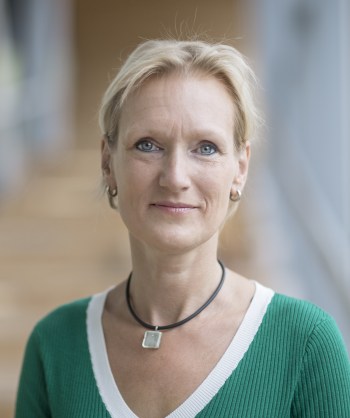
Richta IJntema
Speaker June 6, 2026: dr. R. (Richta) IJntema
Title Lecture: Mental resiliance in challenging clinical practice
Building Mental Resilience in Today’s Health-Care Workforce
Staff shortages, long waiting lists, aging populations, and rising health-care costs are placing unprecedented pressure on health systems worldwide. These challenges directly affect the well-being and job satisfaction of clinicians—especially women, who make up a large share of the global health-care workforce (Van den Goor, 2020). Many find themselves asking: How can I maintain a healthy work–life balance? Where should I set boundaries? How do I stay mentally and physically well? (Verdam, 2020). In this era of increasing demand and limited resources, supporting the mental resilience of health-care professionals is essential. Mental Resilience: A Shared ResponsibilityMental resilience is often framed as a personal trait—something an individual clinician is expected to “develop” through training or experience. Yet resilience is not a fixed characteristic and not only an individual responsibility (IJntema, 2020). It is a dynamic process of adapting to a stressful situation or adversity, shaped by both the individual and the environment in which they work (IJntema, Schaufeli, & Burger, 2023). Factors such as workload, team culture, leadership, available resources, and organizational values all influence how a health-care worker responds to challenges. This shared responsibility is captured in the Psychological Immunity and Psychological Elasticity (PI-PE) model, which illustrates how people adapt—or struggle to adapt—to stressors (see Figure; IJntema, 2023; IJntema et al., 2023).